Renting Out Your Condo to Expats in Thailand: 5 Things Every Landlord Must Know

The trend of renting out condos to expatriates (Expats) is booming in Thailand. Beyond higher rental yields compared to the local market, expat tenants often prefer long-term leases and tend to maintain properties in excellent condition. However, if you are a landlord looking to enter the expat rental market, there are 5 critical “keys” you must understand to avoid future legal headaches.
1. TM.30 Reporting: The Mandatory Legal Requirement
When renting out your condo to foreigners, the “TM.30” is your top priority. Under the Thai Immigration Act, property owners are legally required to report the residence of any foreigner within 24 hours of their arrival.
-
Why it’s essential: It’s a prerequisite for tenants to open bank accounts, apply for internet services, or process a Visa Extension.
-
How to report: The process is now streamlined via the Immigration Bureau’s official online portal, making it fast and paperless.
2. Use a Bilingual (English-Thai) Rental Agreement
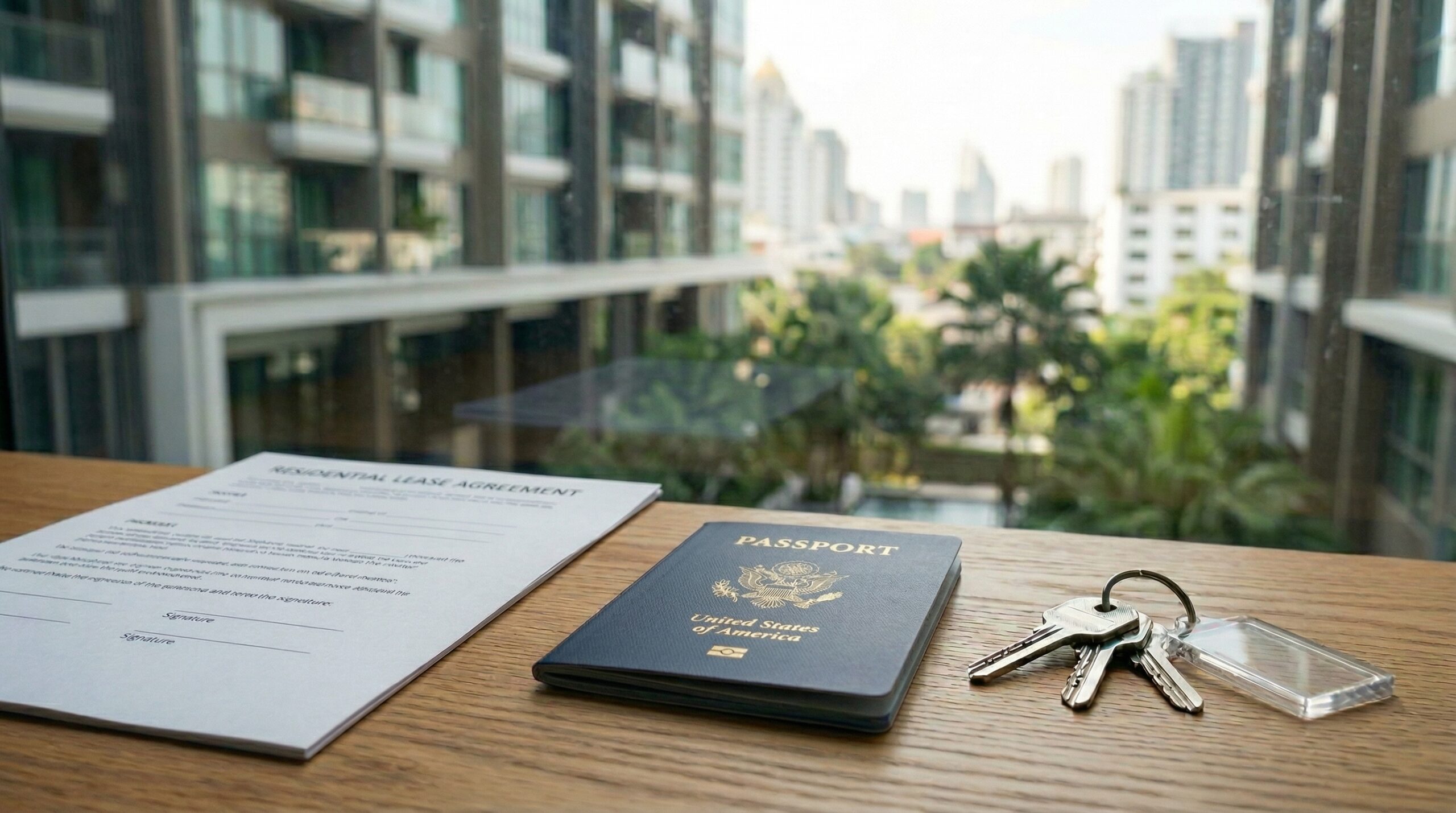
Never rely on a verbal agreement. When dealing with international tenants, a comprehensive, bilingual lease is essential for legal protection and clarity.
Critical clauses to include:
-
Security Deposit: Standard practice is 2 months’ deposit plus 1 month’s advance rent.
-
Utility & Management Fees: Explicitly define who covers electricity, water, and monthly common area fees.
-
Diplomatic Clause: This allows tenants to terminate the lease if they are unexpectedly transferred abroad—a non-negotiable term for most corporate expats.
3. Due Diligence: Verifying Passport and Visa
Before finalizing any real estate lease agreement, you must perform identity verification to ensure your tenant is legally residing in the country.
Documents to verify:
-
Passport: Ensure it is valid for the duration of the lease.
-
Visa Status: Check the visa category (e.g., Non-B, Education, or Retirement).
-
Work Permit: This is a strong indicator of financial stability and legal employment status in Thailand.
4. Tax Obligations: Land & Building Tax and Income Tax
Rental income is taxable. Landlords are required to report this income to the Thai Revenue Department.
-
Personal Income Tax: Rental income must be calculated and declared in your annual tax return (P.N.D. 90/94).
-
Land and Building Tax: Be aware that property used for rental purposes is subject to a different tax rate than owner-occupied residences.
5. Simplify the Process with Shinyu Real Estate
Navigating legal paperwork and finding reliable tenants can be overwhelming. Shinyu Real Estate specializes in connecting landlords with high-quality expat executives and multinational companies.
Why trust us?
-
Professional Tenant Screening: We find reliable, long-term tenants for your property.
-
Standardized Contracts: We provide legally sound English agreements.
-
TM.30 Assistance: We handle the regulatory coordination for you.
-
End-to-End Service: We ensure your investment stays profitable and stress-free.
Conclusion
Renting out a condo to foreigners is a smart strategy to boost your rental income, provided you have the right preparation. By following the law and working with experienced partners, you can enjoy sustainable, long-term passive income.
If you are seeking to invest in or rent out a property in a prime location, let Shinyu Real Estate be your partner. We are here to manage the details, so you can enjoy the returns.
Ready to start? Contact us for a free consultation!
-
LINE Official: @shinyu
-
Website: www.www.shinyurealestate.com
-
Tel: 02-474-0271, 095-904-5171, 091-817-8283
17 Apr 2026
4 Minutes